How to Get People to Leave Negati E Review

If you've ever ordered your morning coffee and felt uninspired by the request to participate in an online survey or leave a social review regarding your experience, you lot probably didn't have a particularly noteworthy experience.
If you're willing to take time out of your day to exit online feedback, information technology's normally considering you lot want to warn people about a bad meet, or to help them make a better ownership determination.
In a world of viral marketing and social influence, online reviews accept the power to brand or break small businesses, simply they aren't the just companies paying attention. Reviews have become such a pivotal role of the ownership experience for so many customers, that even tech goliaths similar Apple can't assistance merely play an active role in responding to more than critical responses.
So what compels us to leave reviews online, and what are we really hoping to achieve by contributing to the public give-and-take of a brand, experience, or production? To find out, we surveyed over 1,000 European and North-American consumers near why they leave bad reviews, how skillful experiences inspire them to give feedback, and the kinds of reactions and rewards they sometimes expect to receive as a effect of their critiques.
Think the online review phenomena might sometimes take ulterior motives? Read on to come across what we uncovered.
Enquiry indicates overall customer satisfaction with in-shop shopping continues to increment, but so do consumers' expectations most what a good shopping experience looks like in the first place. Consumers desire retailers to have better technology, offer more services, and plant better personal connections.
Then what happens when the product or purchase doesn't quite alive up to its expectations?
You might consider leaving a negative review.
While the occasional bad mark can be good for helping customers build trust with a brand, too many can be a clear indication that something's gone seriously wrong.
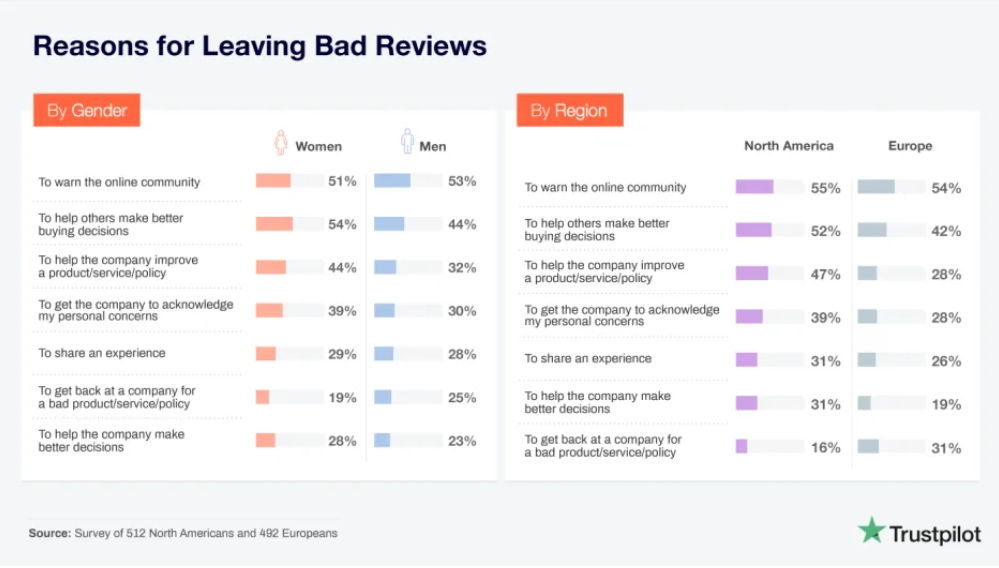
Overwhelmingly, more than half of both women and men admitted they leave negative comments about businesses simply as a warning to the online customs. Other reasons included helping establish proper expectations and to steer buyers away from making a purchase they'll later on regret. Women were about likely (54 percent) to report doing it to help other people make improve buying decisions. While some wanted to assistance companies better their services and others wanted to share their overall feel, very few seemed to have malicious intent. Less than 1 in 5 women and ane in 4 men shared negative feedback to get back at a company for a bad policy or production.
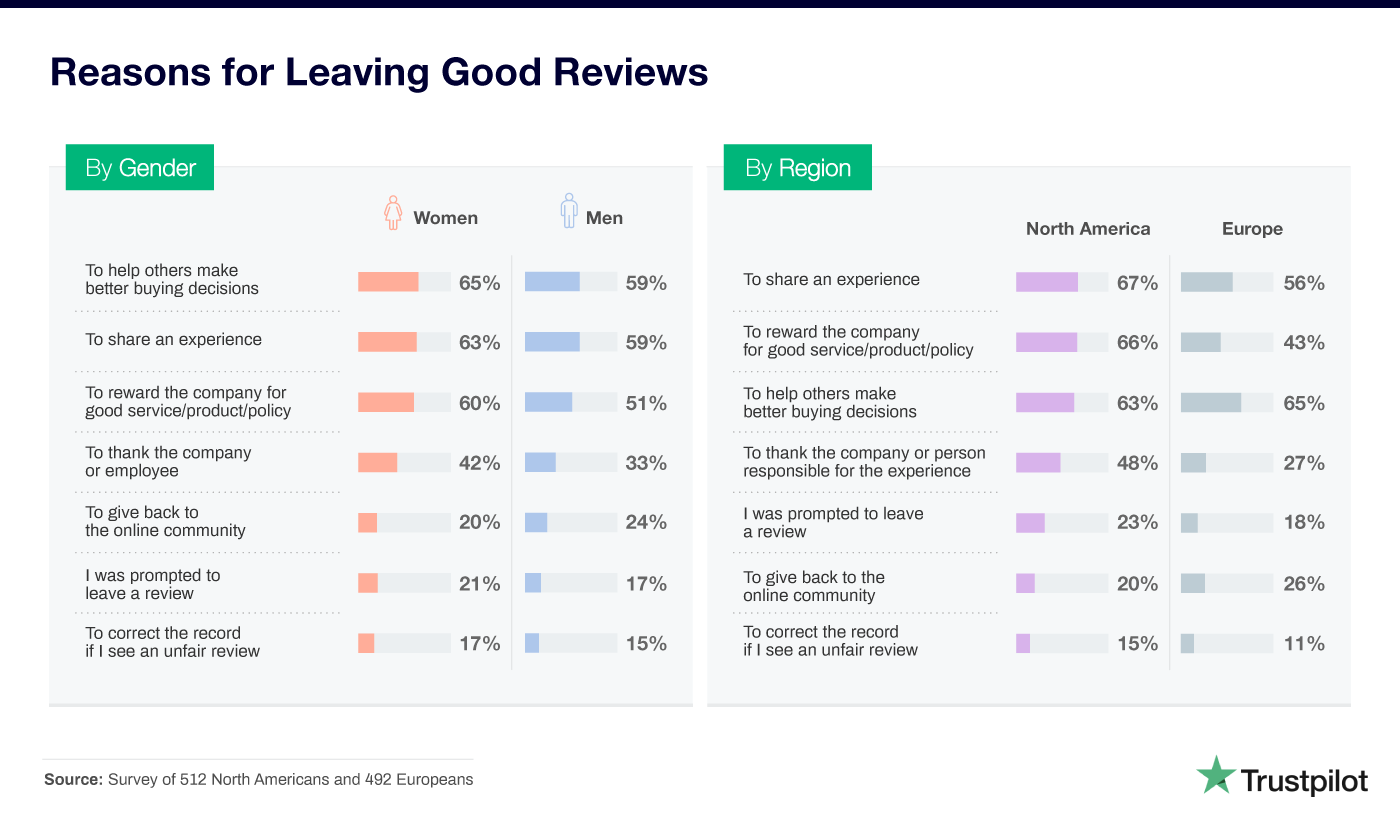
A business doesn't have to have exclusively glowing reviews in society to assistance compel people to buy its products or frequent its store. Good or bad, a vast bulk of customers will leave businesses a review when prompted, and well-nigh consumers have the same calendar for their positive comments equally their negative reviews: helping other people make better purchases.
Amid women, helping other people make better ownership decisions was the leading reason for spending time writing a positive review for a product or service, while men were tied for both meliorate buying know-how and simply exercising the opportunity to share their experiences overall.
Both men and women were sometimes compelled by the opportunity to reward companies or employees for adept service, and others simply wanted to give dorsum to their online communities.
However, online review etiquette may not entirely translate beyond borders. North-American consumers were almost twice as likely to use the power of their positive feedback as an opportunity to thank a specific staff member for their efforts.
Standard customer service code dictates a simple truth most businesses endeavour to live by: The customer is always correct. Even if the average employee doesn't ever agree, it's a common adage that's been designed to remind brands to keep the customer – and their grievances – in proper perspective. But does that sometimes embolden consumers to expect more than than they're entitled to?
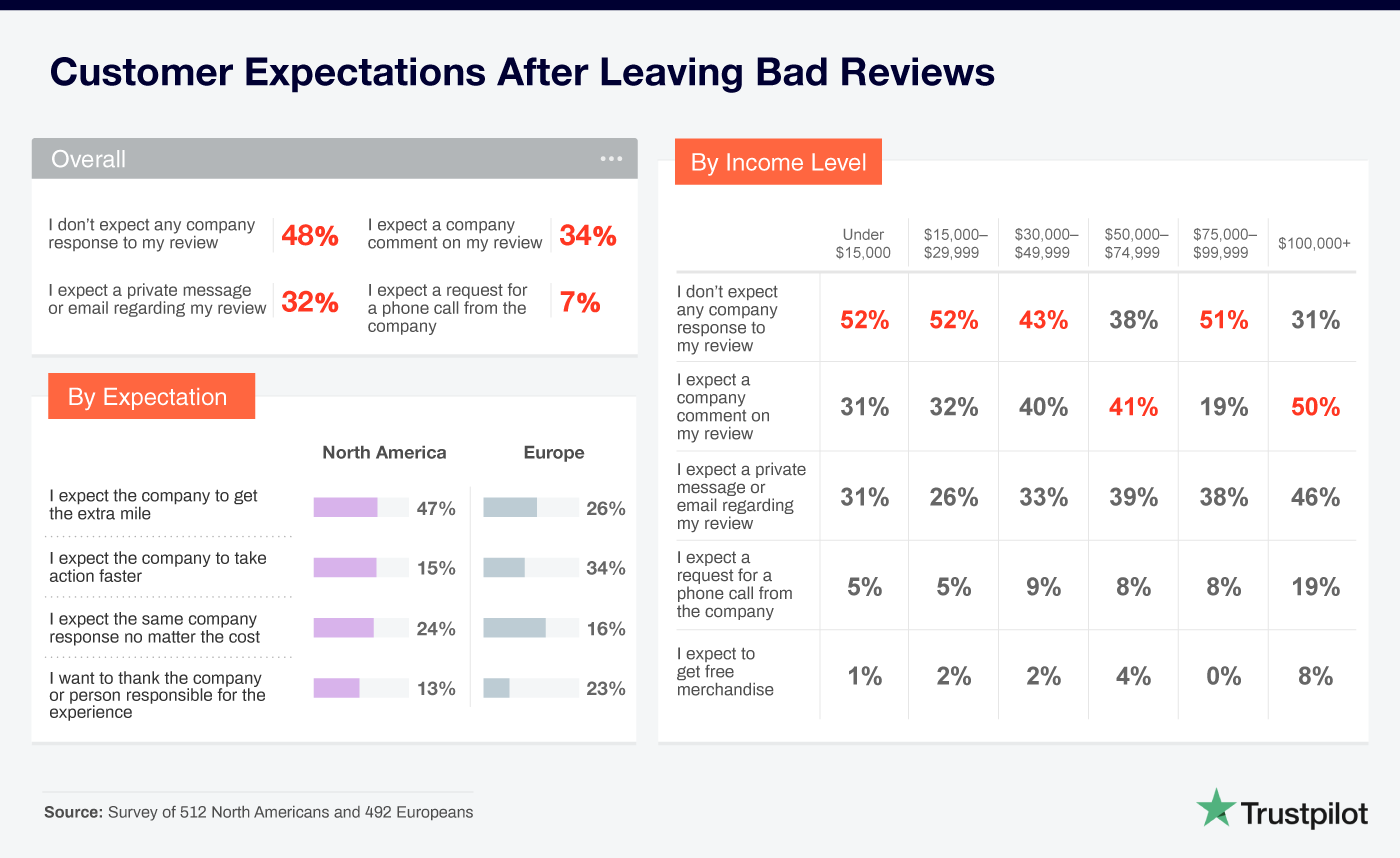
While a bulk of people who've made the endeavour to get out a bad review for a visitor or their services generally don't expect a response to their comments, roughly 1 in iii expected either a company comment or private message. In some cases, people may fifty-fifty exist expecting compensation in the class of merchandise or credit to help make up for their poor feel. Less mutual overall, we constitute it was consumers with the highest annual income who felt the most entitled to gratuitous merchandise in response to their negative feedback.
Amid North-American consumers, this sentiment was specially strong when asked well-nigh expensive purchases. Nearly half admitted they envisioned companies wanting to go the "extra mile" to correct their bad experiences. Only one in four Europeans had the same perspective in dissimilarity.
With so many people expecting to receive personalised responses to their negative reviews, it's off-white to wonder how they desire those conversations to be handled. There are plenty of examples for business organization owners on the all-time ways to address public criticism, and most experts recommend refraining from defensive comments and focusing on finding a way to gear up the client's concerns.
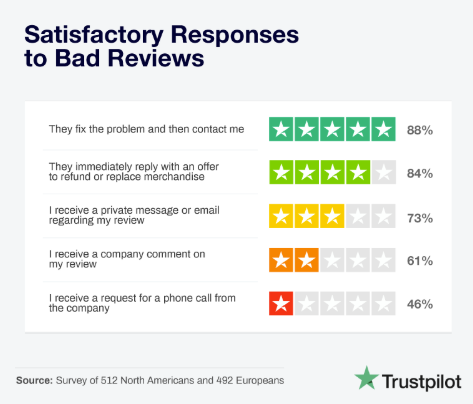
In general, that's exactly the kind of response most consumers are looking for. A vast majority – 88 pct – of people voted for companies to fix the result at mitt and then contact them regarding the solution. Slightly fewer (84 percent) expected an firsthand response with the offer to refund or supercede the production in question.
However, for some consumers, a uncomplicated respond would suffice as a response to their negative feedback. Nearly iii in four would be happy with a private message or electronic mail, and 61 percent expected a company to publicly comment on their review.
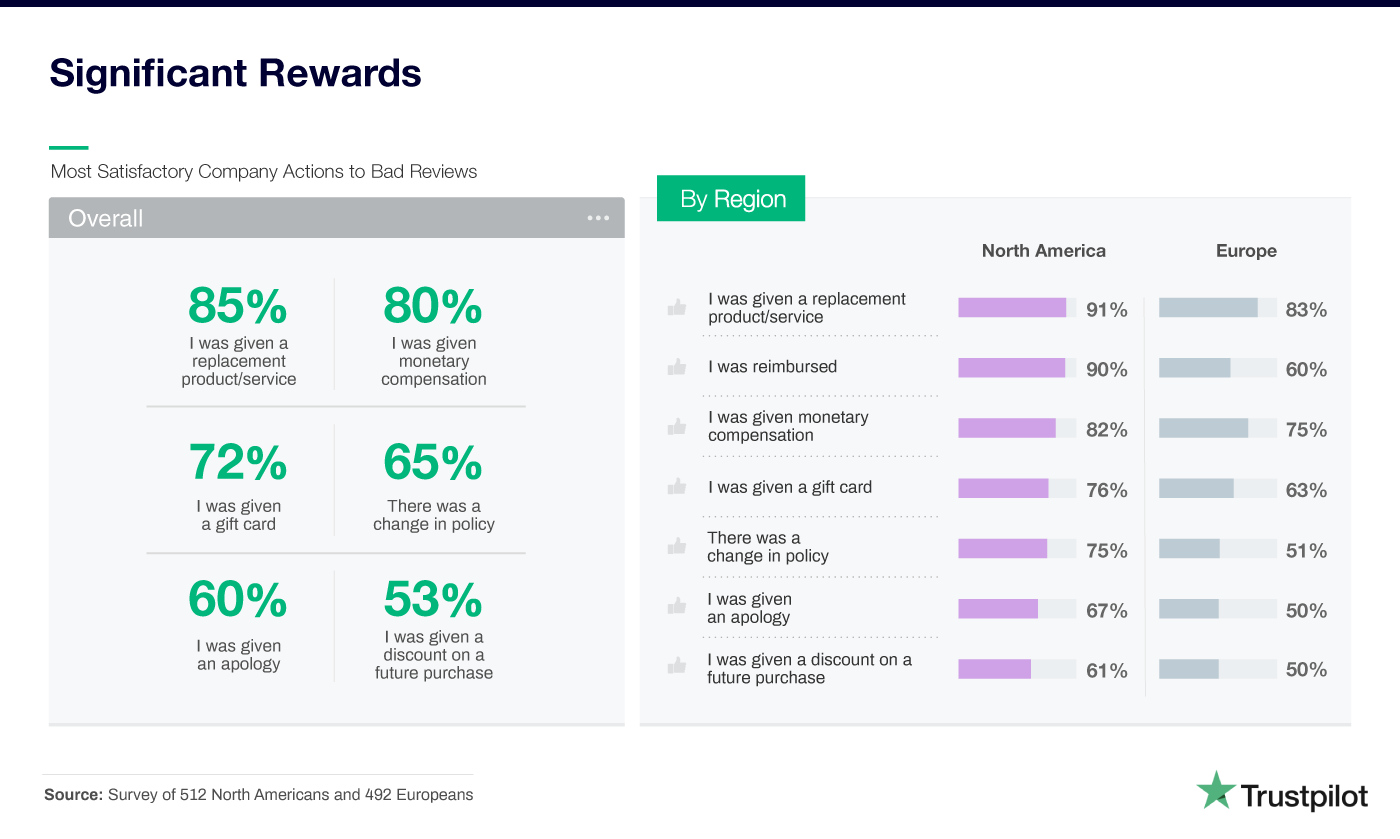
Depending on how bad an interaction is or how poorly a product performs, in some cases, a reply from the visitor regarding a negative online review simply isn't sufficient to resolve the issue. Occasionally, consumers expect to be compensated monetarily to help make up for the perceived crime.
Overall, 85 percent of people believed a replacement of the product or service would exist in order following a negative review, and 80 percent would prefer being given monetary bounty for their time and inconvenience. While others wanted a reimbursement for their purchases or a souvenir bill of fare to help make up for the feel, virtually 2 in 3 wanted companies to go even further by instituting policy changes storewide to help resolve their concerns.
Regardless of the extent of their requests, from replacement on faulty products to discounts on future purchases, we found Due north-American consumers were more inclined to wait these kinds of rewards for their negative reviews than European shoppers.
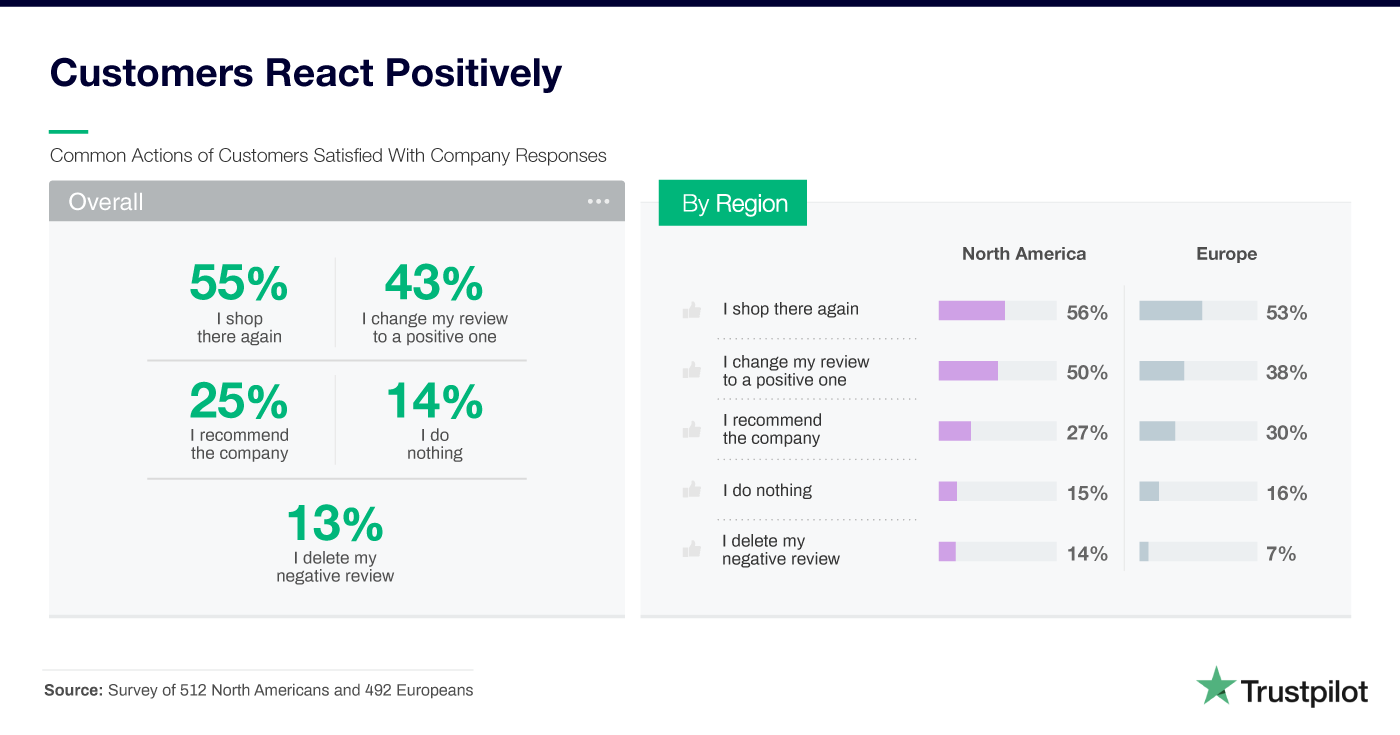
Customers may have high expectations for what they expect from their in-store shopping experiences and even higher expectations for how companies should respond (including how speedily) when something's gone incorrect plenty to warrant a negative online review. And how many customers feel their concerns take been handled poorly tin take a long-term issue on their relationship with that brand.
When customers feel their reviews take been responded to appropriately, more than than half admitted to shopping at the aforementioned location again. More than 2 in 5 customers would even become so far as to reverse their overall rating of the visitor and edit their review into a more positive critique. For 25 pct of people, how well companies answer to criticism tin can even help transition them from detractors to overall promoters of that company.
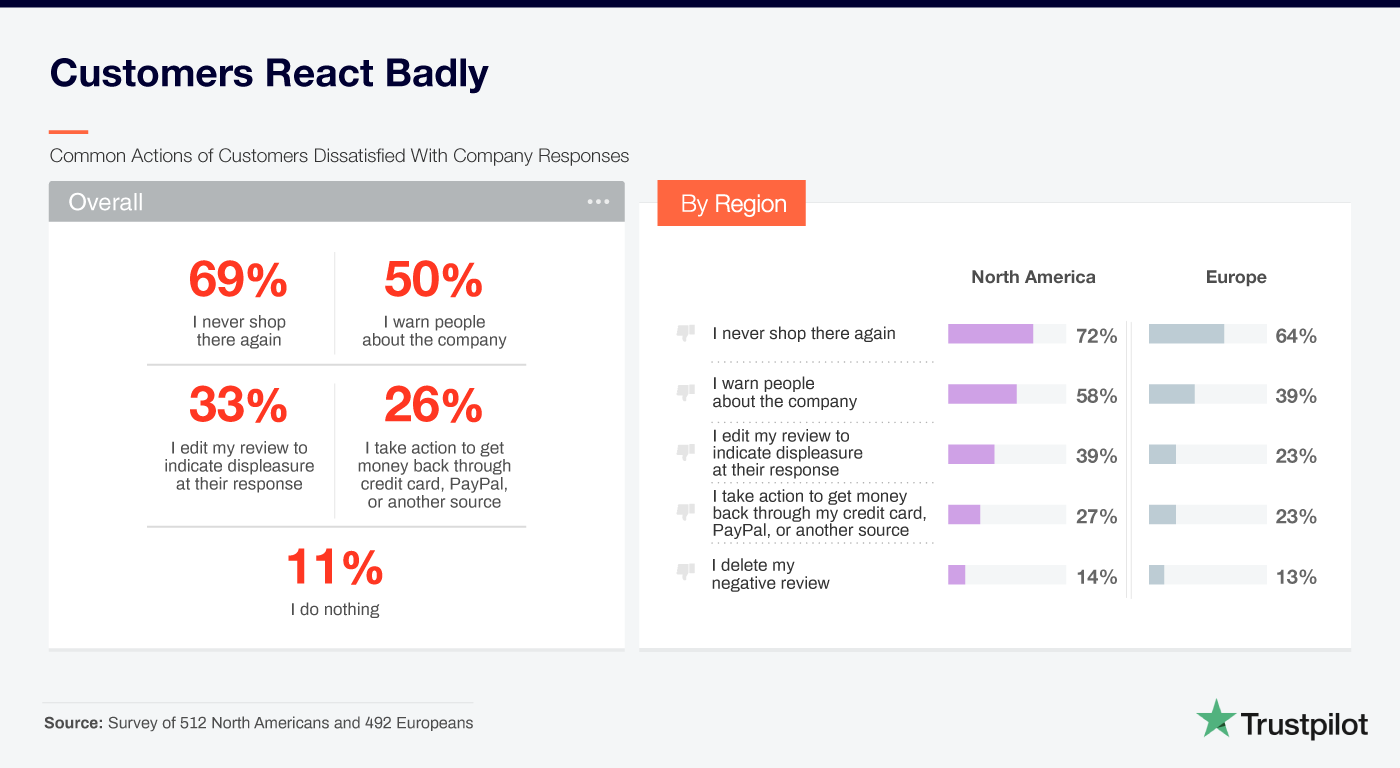
In contrast, failing to answer appropriately sometimes emboldens customers to take further activity confronting a company. More than two in three people who were unsatisfied with a visitor response to their feedback admitted they wouldn't shop with that establishment once again, and one-half would warn others to stay away from the company also. And if they really believed a refund was in guild, 1 in 4 would go through their credit card company to contest the original accuse themselves.
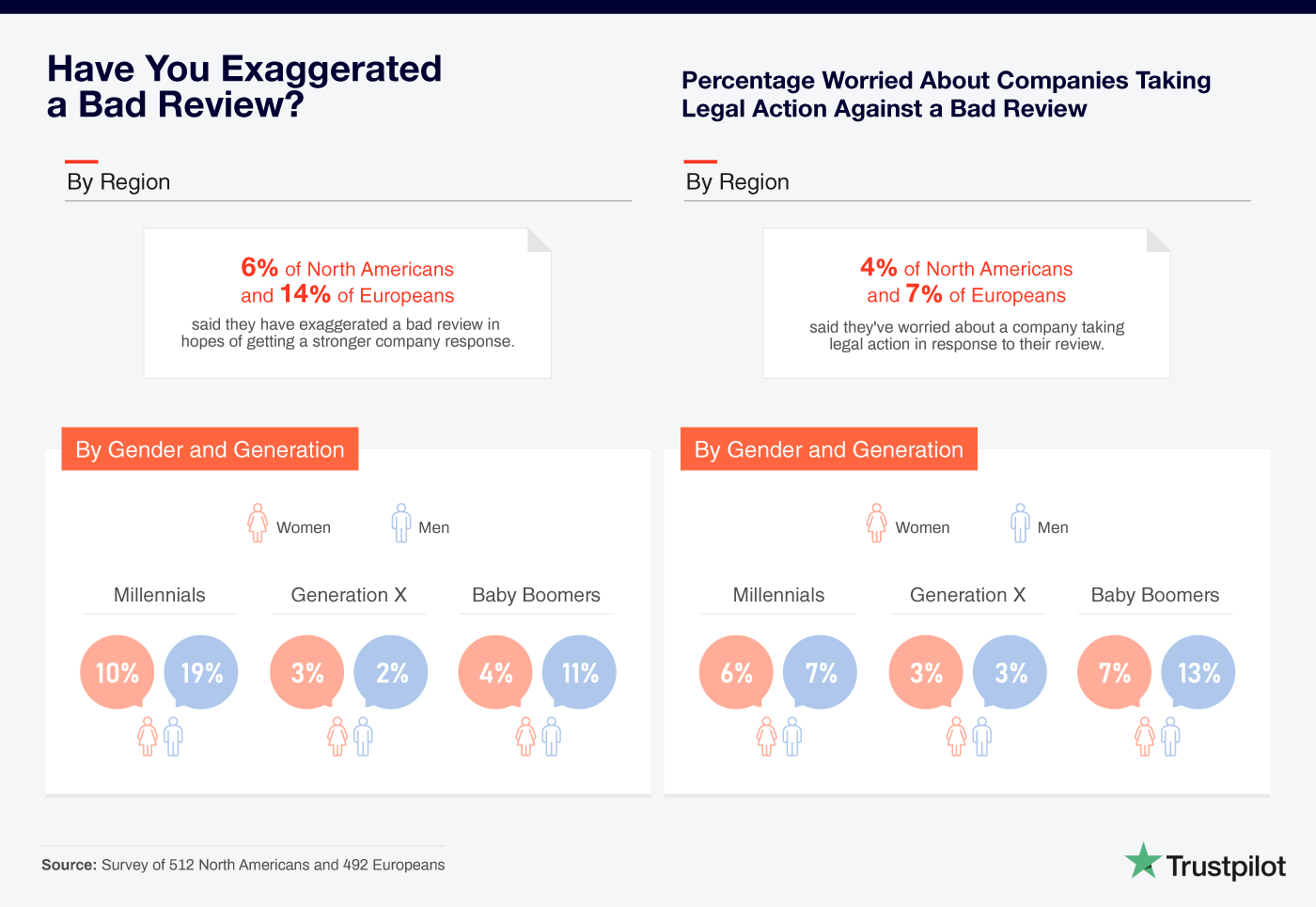
Some may telephone call information technology a white lie, others may telephone call it a fisherman'south tale, but don't be surprised that in that location is some exaggeration in online reviews by consumers. They're hoping to elicit a stronger response from the company, and it's Europeans more and so than Americans who employ this practice.
Across gender and generational groups, information technology is typically men who find ways to expand upon the truth to garner a response. This can be unsafe, however, as some companies and pocket-sized businesses have started fighting dorsum against negative online reviews.
I woman in New York constitute herself beingness sued by her doctor for roughly $1 million after leaving a review that called the business "very poor and crooked." This is not the only example of companies firing dorsum at negative criticism online – more than e'er, businesses are defending their reputations and are willing to go to courtroom to protect their brand.
As the face of retail continues to evolve and customer service stands front end and heart for most brands as a key distinguishing characteristic between them and their competitors, the average consumer has college expectations today of what they expect from their shopping experiences and the goods and services they purchase. Nowhere is that more axiomatic than the phenomena that are online reviews. For both good experiences and bad, customers aren't simply leaving feedback for the company to see, they expect a response (and sometimes retribution) for their concerns.
At Trustpilot, we know every review has a personal story, and behind that review is an experience that matters. By sharing experiences that help build trust in the community, nosotros help customers buy with confidence and help companies use their online reviews to their reward. Through shared reviews and experiences, customers tin can find the very best in everything from pet care to their own health and wellness. At Trustpilot, we help you build trust and amend your company's reputation among electric current and potential customers.
Detect out more nearly Trustpilot, asking a demo below.
Request a costless Trustpilot demo
murakamitwoured39.blogspot.com
Source: https://uk.business.trustpilot.com/guides-reports/learn-from-customers/bad-reviews-why-people-write-them-and-what-they-expect
0 Response to "How to Get People to Leave Negati E Review"
Post a Comment